The
family. We were a strange little band of characters trudging
through life sharing diseases and toothpaste, coveting one
another's desserts, hiding shampoo, borrowing money, locking
each other out of our rooms, inflicting pain and kissing to heal
it in the same instant, loving, laughing, defending, and trying
to figure out the common thread that bound us all together.
An article in the Daily Express earlier this
year in the UK kept me amused ... and
highlighted how generations have changed. It
was carried out by the Sainsbury Active Kids
Scheme.
It asked kids
what their 10 top activities were and compared those with a list
produced 30 years ago.
Today’s Kids List
30
years ago list
1 Texting
on phones
1 Tag
2
Football
2 Kiss
chase
3 Play
Station
3
Hopscotch
4 Reading
Celebrity magazines
4
Skipping
5 Eating
sweets
5
Rounders
6 Listening
to I pod
6 British
Bulldog
7 Sudoku
7
What's
the time Mr. Wolf
8 Hanging
around shops
8 Marbles
9 Surfing
the net
9 Cats
cradle
10 Taking
photos on the phone
10 Stuck
in the mud
The
View on parenting
Movie
When Roles Reverse: A Guide to
Parenting Your Parents (Paperback)
by
Jim Comer (Author)
With a huge segment of the population facing the dilemma of how to
care for
an aging parent, Jim Comer has provided a timely and invaluable
resource.
Written with humor and compassion, When Roles Reverse is both a
compelling
memoir and an indispensable "how to." It answers the questions no
one wants
to face, offers support for those who fear making life-altering
decisions,
and provides essential guidance on where to find information and
assistance. One especially nice thing about the book is that it
addresses the emotional dimension of caring for parents and does a
good job of capturing what it's like to parent your parents. If you
need a crash course in parenting parents, go straight to Chapter 23:
Fifty Questions That Will Save You Time, Money, and Tears. You'll
find you haven't even thought of many of these questions and don't
know the answers to most of them.
WHAT
ELSE IS
NEW ...
Kung Fu your way to LA
Win a family trip to Hollywood and
stacks of other prizes thanks to 'Kung
Fu Panda'
As children's first and most important teachers, families have a
major role to play in motivating children to read during the summer
months. There are many strategies families might employ to encourage
summertime reading. Here are tips offered by Reading Is Fundamental:
Besides
the
wonderful
aromas,
flavors,
and
textures
that
food
has,
each
food
group
provides
varying
amounts
of
diverse
nutrients.
Each one
of the
five
food
groups
supplies
some,
but not
all, of
the
nutrients
you need
for good
health.
For this
reason,
it's key
that you
eat from
each
food
group
every
day.
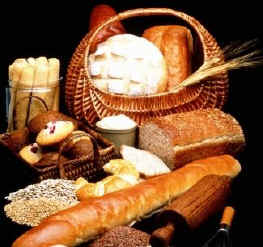
Bread,
Cereal,
Rice,
and
Pasta
Group
The base
of the
Food
Guide
Pyramid
includes
all
foods
made
from
grains.
These
foods
should
form the
base of
a
nutritious
diet.
Foods in
the
bread,
cereal,
rice,
and
pasta
group--or
the
starch
group--are
rich in
complex
carbohydrates
(or
starches).
Complex
carbohydrates
are an
excellent
source
of
energy.
They are
low in
fat and
cholesterol
and are
your
body's
main
source
of
energy.
Allexperts, was the very
first large-scale question
and answer service on the
net!
Thousands of volunteers,
including top lawyers,
doctors, engineers, and
scientists, are available to
answer your questions. All
answers are free and most
come within a day!
We all want our
children to have
good manners.
Manners can and
should begin to be
taught to children
as soon as they
begin to speak.
Saying “please” and
“thank you” are
common manners.
Parents who model
good manners in
front of their
children often see
the children
beginning to use
appropriate manners.
If your child has
bad manners,
implement some of
the “Manners Matter”
listed below.
Remember, parents
need to demonstrate
good manners. If you
show up to the
dinner table not
wearing a shirt, the
child may
demonstrate this
behavior too. Before
you speak to your
child about good
manners, read
through the steps
listed below and
begin practicing
these steps in front
of your child. After
practicing these
steps for at least a
week, sit down with
your child and ask
them if they noticed
any changes that
you, the parent,
have been displaying
in regards to good
manners.
A friend of mine, a successful professional,
posed this parenting dilemma: Suppose your teenager asks you if
you ever smoked pot. Do you tell him the truth? What if you
smoked not just once, or a couple of times, but a fair amount? A
whole lot? What if you tried cocaine?
Things are more dangerous now than they were
back then, my friend continued. The pot is stronger. It’s laced
with all sorts of other drugs. You don’t want your child to
think that if you did it, then it’s ok for them to do the same.
You don’t want to take chances. You have to lie.
I’ve thought this over, and I have to
disagree. I’m mostly talking from my own personal experience.
Attention-deficit
hyperactivity
disorder
(ADHD)
is a
condition
that
makes it
hard for
affected
children
to
control
their
behaviour
and pay
attention.
It is
sometimes
referred
to as
ADD
(attention
deficit
disorder).
Anagrams
are words or phrases made by mixing up the
letters of other words or phrases, e.g.
THE EYES is an anagram of
THEY SEE. Here are some more
good ones: